A parking lot is where most minor “adventures” with dents and scratches happen. A parking damage can be anything from a simple scratch on your car, a typical fender bender, or sometimes someone just drives off and leaves you with the problem. Below you’ll find a simple guide: what to check, what to document, and when to call the police, so you don’t waste time or money.
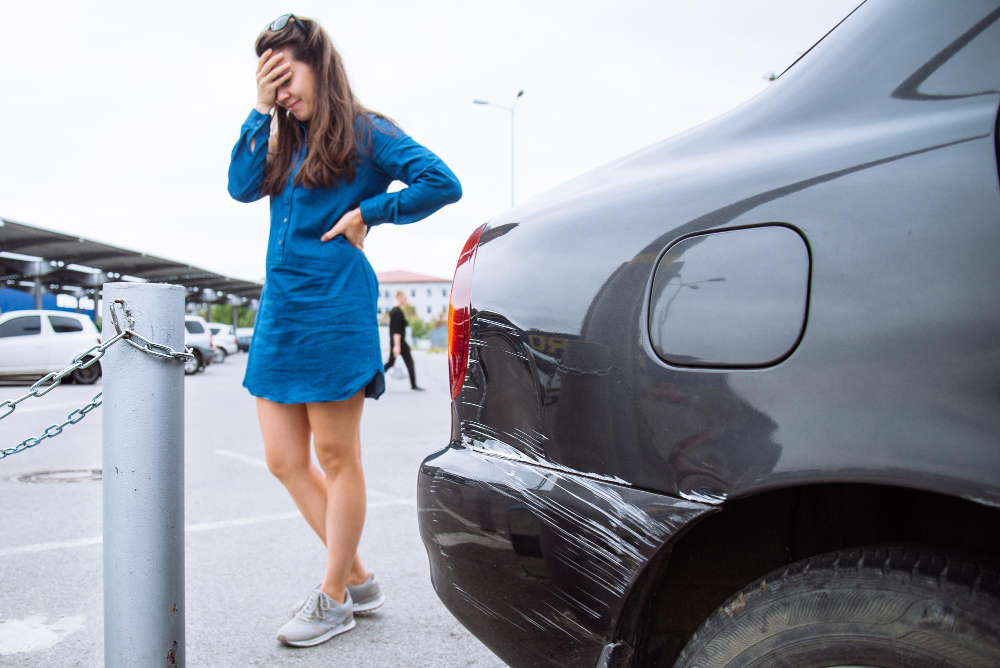
What to do immediately after spotting the damage
The first few minutes are important, as it’s easy to forget details. If you’re a Uber, Bolt, or Freenow driver, it’s best to solve the issue right away to avoid work downtime. Even if the damage looks “cosmetic,” it’s worth acting methodically.
- Secure the scene and make sure no one is hurt
- Take photos: wide shots (the car and surroundings) and close-ups of the damage
- Check for cameras (store, neighborhood, or parking lot monitoring)
- Look around for witnesses—sometimes someone saw the exact moment of impact
- Don’t fix anything “in a hurry” before documenting (e.g., don’t polish the scratch)
Scratching your car in a parking lot – when it’s “just a scratch” and when to report it
Scratching your car in the parking lot can be deceiving: a single scratch may just be superficial, but there can be deeper damage underneath. If you see it stripped down to the primer or metal, a cracked bumper, a dent, or a broken light—this is real damage worth reporting.
Pay attention to:
- the location of the scratch (door edges and fenders are particularly prone to rust)
- whether the part is deformed (even minimally)
- whether anything sticks out or creaks when closing the door
Fender bender in a parking lot – how to write a statement calmly
If the person at fault is present and admits responsibility, usually a statement is enough. For minor parking lot collisions, details matter—a phrase like “bumper scrape” sounds harmless, but insurers want precision.
Make sure your statement includes:
- driver’s and owner’s details, license plate numbers, and VIN (if you have it handy)
- insurer’s name, policy number, and third-party liability insurance validity date
- description of the incident: where, when, and how the vehicles made contact
- a situational sketch (a simple drawing will do)
- clear signatures from both parties

BECOME
A TAXI DRIVER
Work and earn right away!

Parking lot collision while reversing – the most common scenario and who’s usually at fault
A parking lot collision while reversing is a classic: someone backs out of a spot, someone else drives down the lane—and bang. In practice, the person reversing is often at fault, since they’re required to be extra cautious and give right of way. But there are exceptions, such as if the other driver was speeding, passing incorrectly, or also making a maneuver.
If you have different versions of events:
- take photos of the position of the cars and any marks on the road (if there are any)
- look for a witness or surveillance footage
- consider calling the police if you can’t agree on who is at fault
Parking lot damage with no perpetrator – what to do to avoid being left with the bill
Parking damage with no known perpetrator hurts the most because you can’t write a statement with anyone. But you can still act wisely to increase your chances of finding the culprit or getting repairs covered by your own insurance (if you have it).
Do this step by step:
- report the incident to parking security/management and ask to secure any recordings
- note the time, location (sector, alley number), and conditions (weather, lighting)
- if the damage is greater or you suspect a “hit and run” – consider calling the police
- check your own comprehensive insurance coverage (it often covers parking lot damages)
Remember: surveillance footage is often erased after a few days, so time is not on your side.
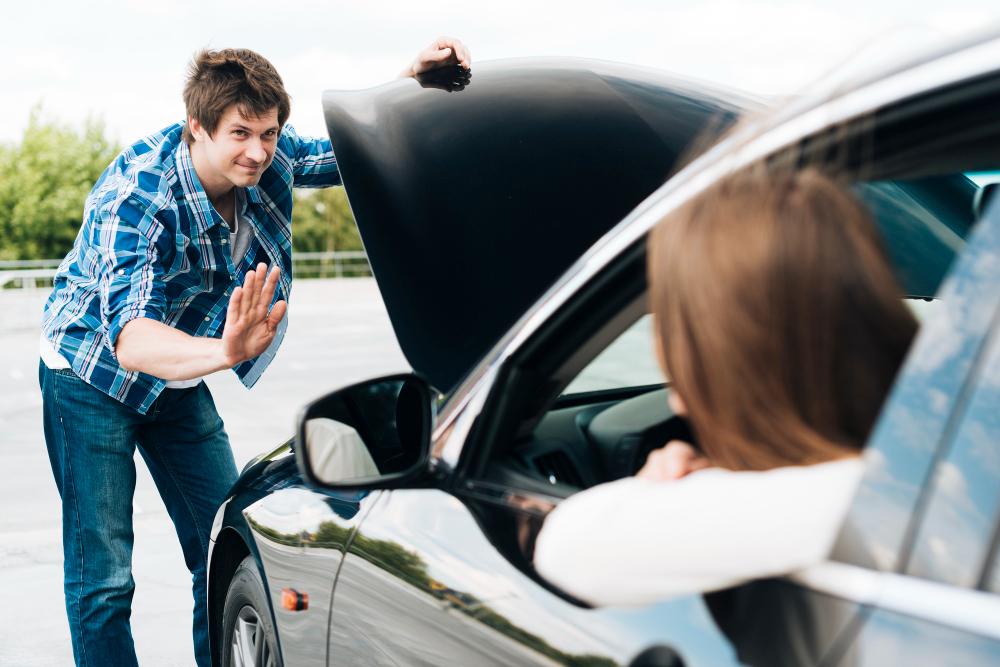
When to call the police and when a statement is enough
You don’t need to call the police for every scratch, but there are situations when it’s the best option.
Call the police when:
- the other party refuses to provide their details or has fled
- there is a dispute about who is at fault (common when reversing in parking lots)
- you suspect the driver is under the influence of alcohol or behaving aggressively
- there is damage to property of significant value (e.g., parking lot infrastructure)
Handy checklist: what is worth having in your car
These are small things that can save you a lot of time.
- a pen and paper or a ready-to-use statement form
- the mObywatel app – you can now use it to fill out a statement online
- phone charger (for taking photos and contacting your insurer)
- car dashcam (sometimes it captures parking lot incidents)
Summary
Parking damage can happen to anyone, but the difference lies in how you react: photos, witnesses, surveillance footage, and a proper statement can resolve the matter quickly and without stress. Knowing the rules allows you to handle the situation without unnecessary nerves that could cloud your judgment.

BECOME A TAXI DRIVER
Work and earn right away!