Speed limits in Poland – how to drive safely and legally?
Have you ever wondered why, despite so many road signs, so many drivers are still unsure of how fast they can go? Speed limits in Poland are a topic that returns like a boomerang in every road safety discussion. It’s not just about avoiding fines, but above all about getting to your destination safely. With so many regulations, it’s easy to get confused, especially since the types of roads in our country can be misleading.
As a driver, you have to keep your eyes peeled. Changing infrastructure and new sections of expressways are great news, but they also bring new challenges. In this article, we’ll organize your knowledge about what road speed limits are allowed in 2026. Thanks to this, every journey will be not only comfortable but also stress-free when you spot a police car.

BECOME
A TAXI DRIVER
Work and earn right away!


Speed limits in built-up areas – easy on the gas!
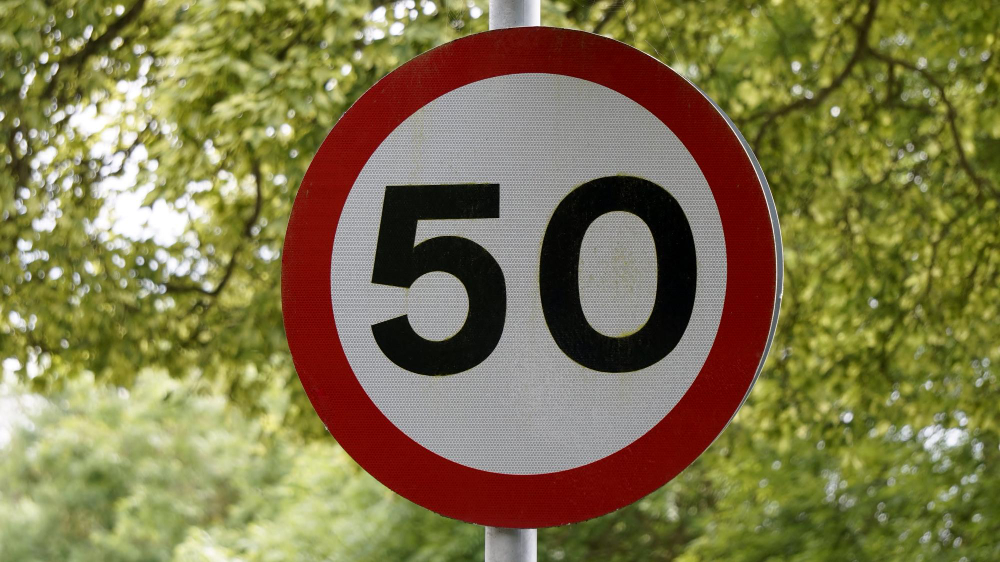
Let’s start with the places where we spend most of our time behind the wheel – that is, cities and villages. The basic speed limits in built-up areas are clear and straightforward. The limit is 50 km/h around the clock. This standard is designed to protect pedestrians and residents from noise and danger. Remember, though, that signs can change this limit – both increasing it (e.g. on wide city arteries) and decreasing it.
Pay special attention to so-called residential zones. These are specific areas marked with a blue rectangular sign, where the pedestrian always has absolute priority. In such a zone, speed limits are very strict – you cannot exceed 20 km/h. You need to remember this, especially if you plan to be a driver for popular taxi apps like Bolt, Uber and Freenow. Furthermore, speed bumps do not have to be signposted there, so dynamic driving may result in suspension damage.
Speeds on roads outside cities – motorways and expressways
Leaving past the “city name board,” you enter a world of higher speeds. However, many drivers make mistakes here, confusing a single carriageway expressway with a dual carriageway one. The difference is crucial because it affects how fast you can legally drive.Speed limits in Poland on expressways are among the highest in Europe, which is quite convenient.
Here’s a cheat sheet worth memorizing:
- Motorways: Here, you can go up to 140 km/h. This is the highest limit in our country.
- Dual carriageway expressways: On popular two-lane expressways in one direction, the limit is 120 km/h.
- Single carriageway expressways: If the route is classed as “S” but only one carriageway (one lane in each direction), slow down to 100 km/h.
- Ordinary roads outside built-up areas: Here, you normally go 90 km/h unless it’s a dual carriageway road (two lanes in one direction) – then the limit rises to 100 km/h.
Speed limit signs – are you sure you see them?
Although general rules are important, speed limit signs (B-33) are always paramount. They dictate the conditions for each specific section. Often, on the motorway, due to roadworks or bad surface conditions, temporary limits appear. Ignoring them is a recipe for trouble. Also remember signs that lift these restrictions – characteristic white disks with a black diagonal stripe.
Many drivers forget that an intersection (though not every one!) cancels the previous speed limit. It’s a trap that’s easy to fall into when driving “out of habit”. Recognition systems in modern cars can help, but nothing replaces your attention. Also pay attention to variable message signs above highways – they respond to the current weather and traffic conditions.

Table of permissible speeds for passenger cars
To make things easier, we’ve prepared a table that clearly summarizes speed limits in Poland for passenger cars (up to 3.5 t):
| Type of road | Permitted speed | Notes |
|---|---|---|
| Residential zone | 20 km/h | Pedestrian always has priority |
| Built-up area | 50 km/h | Applies around the clock |
| Outside built-up area | 90 km/h | Single carriageway road |
| Outside built-up area | 100 km/h | Dual carriageway road |
| Expressway (one carriageway) | 100 km/h | Marked with “car symbol” sign |
| Expressway (two carriageways) | 120 km/h | Most popular type of S road |
| Motorway | 140 km/h | Toll or free |
Data based on general road traffic regulations.
Penalties for speeding
Failure to comply with the above rules results in severe consequences. The fine schedule has become much stricter in recent years, and penalty points are cleared more slowly. The police are equipped with increasingly modern equipment, and drones monitoring road speeds no longer surprise anyone.
If you have a lapse of memory and your foot gets too heavy, you have to reckon with the costs. You can read about the financial and points details resulting from individual violations in our previous post, where we explained penalties for speeding in detail. Knowledge is power—and in this case, it’s savings as well.
Summary
Knowing the speed limits is the foundation of safe driving. Speed limits in Poland are logically structured, though they require drivers to pay constant attention and recognize the type of road they are driving on. Remember that the given values are maximum speeds, not mandatory ones – always adjust your driving style to the weather conditions.
Safe travels and smooth returns! If you’re looking for more advice for drivers, check out other articles from the “Driving 5.0” series.

BECOME
A TAXI DRIVER
Work and earn right away!