Working at Bolt has become one of the most popular forms of flexible earning in Polish cities. A Bolt driver is a person who transports passengers on behalf of the Bolt app, using their own car or a vehicle rented from a fleet partner. For many, it’s an additional income alongside a full-time job or business, while for others – it is the main source of revenue with real earning potential. The work model is based on freedom: the driver decides on their own hours, number of rides, and work intensity, with pay directly tied to the number of completed trips.
This guide shows what everyday taxi work at Bolt looks like – from preparation, through registration and first login, to earning strategies, settlements, and costs. It’s a combination of city logistics, passenger service, and managing your own finances, especially when you cooperate with an experienced fleet partner like Avalon Logistics Group.
ZOSTAŃ
KIEROWCĄ TAXI
Praca i zarobki od zaraz!
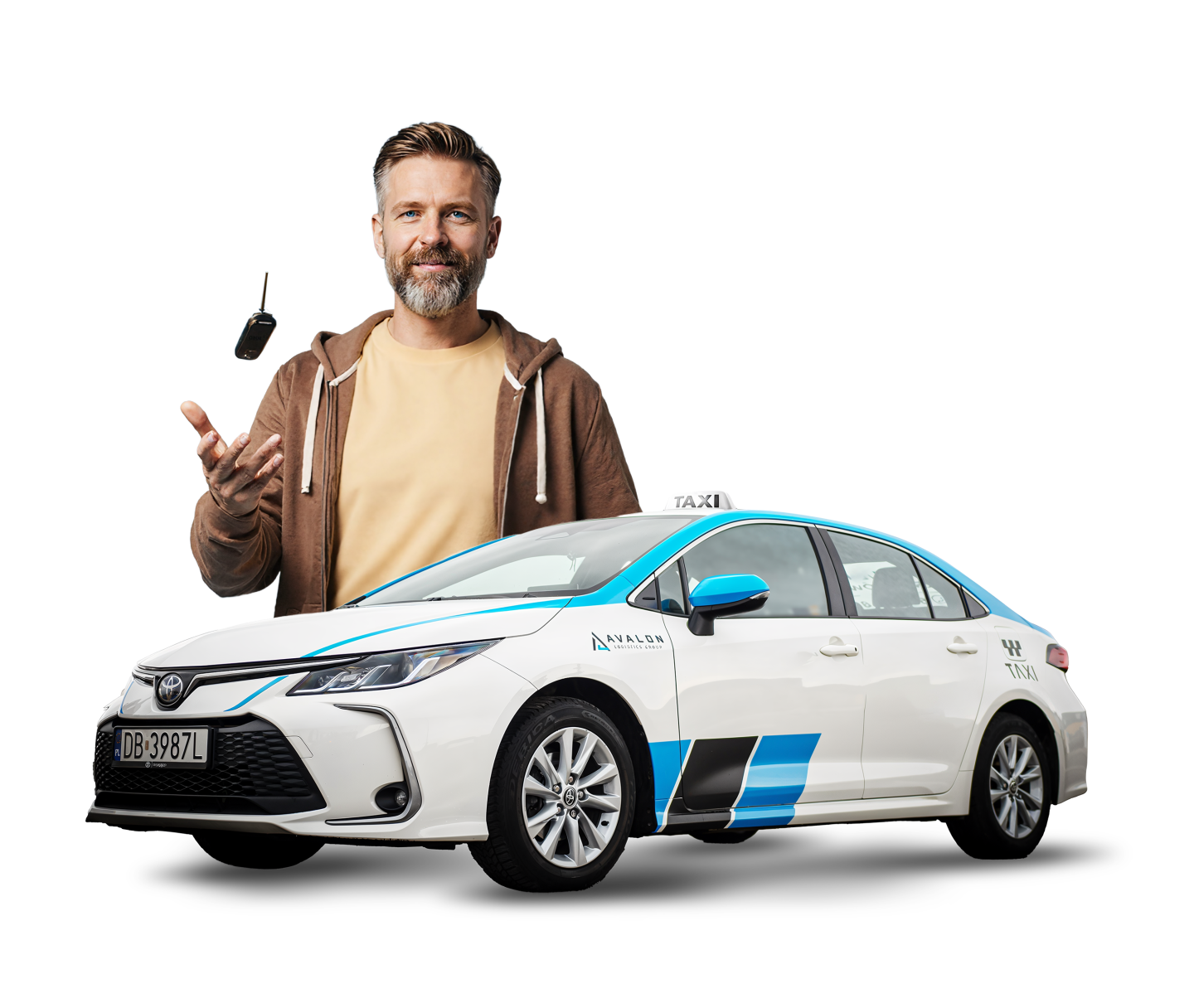
Who is a Bolt driver and what does taxi work at Bolt involve?
A Bolt driver is responsible for providing passengers with a safe and comfortable journey from point A to point B, in accordance with the app’s rules and passenger transport regulations. On a daily basis, they tackle challenges related to city navigation, serving various types of customers, and managing time in traffic. A Bolt driver does not work on a traditional employment contract – they operate in a flexible model or through a fleet partner, receiving payment for each completed ride rather than hours “on the schedule.”
The key features that distinguish working at Bolt taxi:
- complete flexibility – the driver turns the app on and off at will, deciding when to work,
- payment based on rides, not just being online,
- the possibility to work with a fleet partner, Avalon Logistics Group, who handles formalities and helps you get started,
- earning potential depends on your work strategy, peak hours, season, and cost control.
This model attracts people seeking freedom from rigid schedules and those who want to decide for themselves when to work—while also offering real income potential.
Requirements to become a Bolt driver – what do you need?
Starting as a Bolt driver requires meeting a few formal conditions, but the procedure is not complicated. The key elements are age, driving license, documents, medical checkups, and a vehicle properly prepared for taxi work.
Personal requirements for the driver:
- be at least 18 years old,
- hold a valid category B driving license,
- have a valid ID card or passport,
- upload a profile photo (frontal, without sunglasses or a cap),
- undergo medical and psychological examinations certifying fitness for passenger transport,
- hold a criminal record certificate (often required during activation).
Vehicle requirements for Bolt drivers:
The vehicle is the heart of Bolt taxi work. It must meet the platform’s requirements as well as Polish regulations for passenger transport. In practice, the most important thing is for the car to be mechanically sound, safe, and ready for daily use.
Technical requirements:
- have at least 4 doors,
- have a minimum of 5 seats (as stated in the registration document),
- have a valid technical inspection,
- have valid third-party liability insurance (OC policy),
- be clean, well-maintained, and free from visible damage (this directly affects ratings),
- have a working air conditioning system (comfort = better ratings and a calmer work environment).
Vehicle documents:
- vehicle registration certificate,
- OC policy (insurance),
- valid technical inspection,
- documents/elements required locally to work as a taxi (depending on the city and cooperation model).
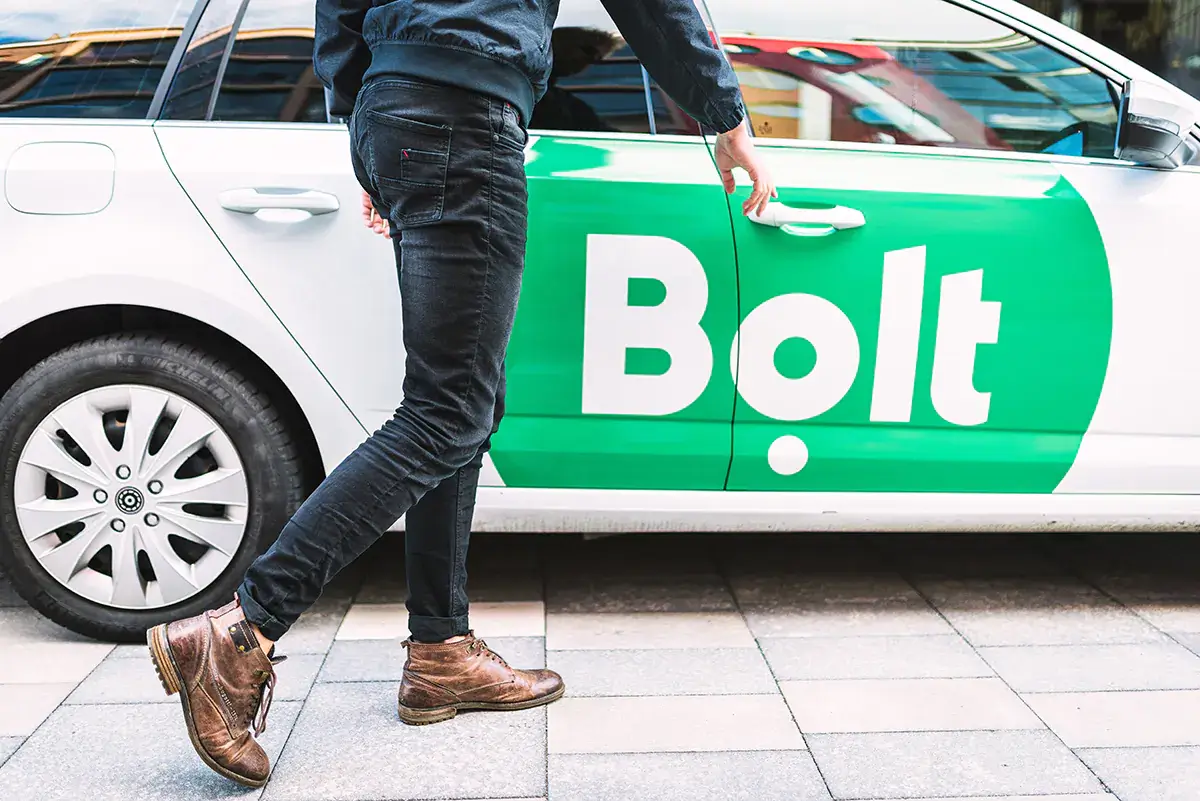
First step – creating an account and registering with Bolt
The Bolt driver registration process is mainly conducted online and involves submitting documents for verification. In practice, those who start fastest are people who immediately gather all their medical tests and documents, and take clear photos/scans (with no cut-off corners or glare).
Registration steps:
1. Creating a driver account
You create an account in the driver app, enter your personal and contact details, and choose your work city.
2. Preliminary verification
The system checks the submitted documents and confirms whether you meet the basic requirements. If anything is missing, you will receive information on what needs to be completed.
3. Taxi formalities (if required)
Depending on the city and cooperation model, you must take care of the formalities related to passenger transport: medical tests, documents, and preparing the vehicle for taxi work.
4. Account activation
After a successful verification, your account will be activated. From that moment on, you have access to the app and can start working.
Cooperation with fleet partner Avalon Logistics Group:
- helps with formalities and organizing the start,
- supports the driver at every stage of registration and activation,
- organizes settlements and payment cycles,
- offers the possibility to rent a vehicle if the driver does not have their own.
For someone just starting work with Bolt, cooperating with Avalon Logistics Group means less bureaucracy and a faster transition to actually earning as a taxi driver.
Vehicle for working with Bolt taxi – the role of transport
The vehicle is the foundation of a Bolt driver’s work. It is both a tool for the job and the largest cost position that the driver must consciously manage. If you have high costs (e.g., high fuel consumption, frequent breakdowns), then even a high number of rides may not yield a satisfying net result.
Vehicle options for Bolt drivers:
Owning your own car
- full control over the vehicle,
- no rental fee,
- full responsibility for maintenance, repairs, fuel, and insurance,
- depreciation cost and risk of downtime in case of failure.
Renting a vehicle from a fleet partner
- fixed weekly or monthly fee (depending on the terms),
- the vehicle is prepared to work in the app and as a taxi,
- fewer formalities and a quicker start,
- the rental fee must be “recouped” through regular work.
For many people, renting is the best option at the start because it allows you to test the industry without buying a car and without the risk that the vehicle will “fail” verification.

Logging into the Bolt driver app – getting started
The Bolt driver app is the central work tool. Once logged in, the driver sees an interface with a map, jobs, and work status. Within a few days, you learn how ride flow works and which hours are best to work.
Key elements of the driver app:
- map with current location – shows your position and work areas,
- availability button – enables the driver to enter the job assignment system,
- earnings history – shows earnings by session, day, and week,
- driver rating – important for account quality and work comfort,
- promotions and challenges – additional ways to increase your score,
- access to support – assistance in case of problems.
After setting status to “online,” the driver:
- becomes available for the job assignment system,
- waits for the first ride proposal,
- can observe demand changes depending on the hour, weather, and day of the week.
Dynamic pricing – how to earn more
Bolt (like any ride-hailing app) operates in a variable demand environment. For the driver, this means the potential for higher earnings at certain hours and locations, when there is heavy traffic in the city and fewer drivers available.
When does demand usually increase?
- rush hours – mornings and afternoons on weekdays,
- weather – rain, snow, frost – passengers are more likely to choose a ride instead of public transport,
- special events – concerts, matches, parties, trade fairs,
- weekends – especially Friday and Saturday evenings and nights.
The practice is simple: if you want to increase your results without adding random hours, work in time blocks when demand naturally rises.
What a single ride looks like – a trip from A to Z
A standard Bolt driver’s trip follows a repeatable pattern that becomes natural after a few days. The most important thing is to do everything calmly and consistently – as it affects your rating, tips, and job satisfaction.
Ride proposal
The app displays a ride proposal containing:
- pickup point – where the driver needs to pick up the passenger (street, building, landmark),
- estimated distance – how many kilometers the ride will be,
- estimated time – how long the ride may take,
- service type – depending on the vehicle category.
The driver has a few seconds to decide whether to accept or decline the ride.

Getting to the passenger
The app guides the driver to the pickup point using GPS navigation. Experienced drivers rely on their own knowledge of the city – they know shortcuts, avoid traffic jams, and know where it’s really possible to pull up. A quick, calm arrival to the passenger is a good start to the relationship and earns a higher rating.
Practical tips:
- before accepting the ride, check if the pickup point is accessible (e.g. not “inside” a gated community),
- if the point is unclear, contact the passenger via chat before arrival,
- don’t “hunt for seconds” – safety and calmness are more important than nervous driving.
Picking up the passenger
The driver arrives at the pick-up location and:
- waits for the passenger (usually, the passenger approaches the car on their own),
- confirms identity – checks the name in the app and makes sure it’s the right person,
- the passenger gets in, the doors are closed,
- the driver starts the ride in the app (automatically or manually – depending on the settings).
Practical tips:
- greet the passenger politely – this strongly affects your rating,
- if the passenger is late, follow the app’s guidelines (waiting time and cancellation options),
- maintain a calm, friendly tone – even if the passenger is upset.
Journey to the destination
After picking up the passenger, the driver:
- follows the route suggested by GPS (but can use their own navigation if they know a better route),
- chats with the passenger or lets them ride in silence (depending on their preference),
- avoids sudden braking and jerky driving – this affects safety and rating.
Practical tips:
- drive safely – that’s your priority,
- play music quietly or ask if the passenger has any preferences,
- if the passenger asks to change the route, handle it calmly and professionally.
Arrival and ride completion
The driver arrives at the destination and:
- stops in a safe place,
- ends the trip in the app,
- the passenger leaves the vehicle,
- the system calculates the fare for the ride.
After the ride is finished:
- the passenger can rate the driver (1–5 stars) and leave a tip,
- the driver can rate the passenger (1–5 stars),
- both ratings affect the average for each party.
Driver rating and reviews – how do they affect earnings?
The driver’s rating is one of the most important quality tools in ride-hailing apps. A low rating means more stress, higher risk of problems, and the need to improve standards. A high rating means a calmer job and a better experience for both driver and passenger.
What affects a driver’s rating?
Passengers rate the driver based on:
- driving safety – smooth braking, careful maneuvers,
- vehicle cleanliness – clean car, tidy interior,
- friendliness and communication – a pleasant tone, willingness to chat, or respect for the passenger’s silence,
- punctuality – quick arrival and efficient service,
- comfort – good temperature, comfort, and no jerky driving.

Practical tips for a high rating:
- be a safe driver – that’s the foundation,
- keep your car clean,
- politely greet every passenger,
- ask if the temperature in the car is OK,
- if the passenger wants to talk, be interested; if not, respect their peace,
- say “thank you for the ride” at the end,
- always drop off the passenger exactly where they indicated.
Tips – extra income for Bolt drivers
Tips can make up a noticeable part of a driver’s income. They most often appear when the passenger feels they’ve received professional, calm service and a safe ride.
When do passengers tip more?
- Longer rides – the passenger travels 30+ minutes and appreciates the comfort,
- Night rides – trips after 11:00 PM often come with higher “tip culture,”
- Good service – politeness, cleanliness, safe driving,
- Weather – in rain and snow, passengers are more likely to appreciate the ride.
A driver who respects passengers and maintains standards will typically earn not only better ratings but also more tips.
Bolt driver earnings – how much can you make?
The topic of Bolt earnings depends on many factors. The app displays gross amounts (revenue), but the real result requires deducting costs: fuel/charging, service, depreciation, insurance, possible car rental, and tax settlements (depending on the cooperation model).
Average Bolt driver earnings in Poland – scenarios (universally):
| Work scenario | Hours per week | Typical daily rides | Monthly gross income (range) |
|---|---|---|---|
| Extra income | 8–12 h | 8–15 | 2,500–4,500 PLN |
| Part-time job | 15–25 h | 12–20 | 4,500–7,500 PLN |
| Half-time “during peak hours” | 25–35 h | 15–25 | 7,000–10,500 PLN |
| Full-time | 40–55 h | 20–35 | 9,000–14,000 PLN |
The above ranges are approximate and depend on city demand, season, car category, working hours (rush hours vs midday), and costs. The most common mistake beginners make is assessing “profitability” after just 1–2 days instead of after a full week or month.
Work models and earning potential:
Full-time (40–55 hours per week)
A driver working 5–6 days a week, averaging 8–10 hours a day, can build a regular income. In practice, your earnings increase when some hours fall during peak times and weekend evenings.
Part-time (15–25 hours per week)
This is the most popular option: a few evenings a week plus the weekend. The key is not the number of hours, but the quality—working during high demand periods can raise your average.
Extra income (8–12 hours per week)
An option for those who want to earn extra without “going full time.” Works best in short, strong blocks: Friday evening, Saturday, Sunday, or morning commutes on weekdays.
What determines your actual earnings?
- Hours worked – the more hours you work, the higher your income; working during peak times gives a higher average,
- Location – large cities and event areas usually generate more rides,
- Vehicle – the category of your car may affect the types of orders and average per ride,
- Driver rating – good service = a smoother job and better reviews,
- Season – demand often increases in winter, during rain, and around holidays,
- Promotions and bonuses – they can boost your results if you plan for them.
Bolt driver costs – actual net earnings
Bolt drivers see gross amounts in the app, but actual profit requires deducting costs. You need to take into account, among others:
- fuel or charging – the biggest cost item,
- vehicle servicing – check-ups, tires, brakes, fluids, repairs,
- vehicle insurance – liability (required), comprehensive (optional),
- vehicle depreciation – natural wear and tear and value loss,
- fixed fees – e.g. vehicle rental if you don’t own your own,
- taxes and contributions – depending on your cooperation model and accounting.
Example breakdown of earnings and costs:
Let’s assume the driver works 8 hours and completes 24 rides at an average of 45 PLN gross per ride.
- Gross income: 24 × 45 = 1080 PLN,
- Left after platform deductions and settlements: depends on the cooperation model,
- Fuel/charging costs: depend on the car and driving style,
- Service/depreciation costs: it’s worth setting aside a fixed amount “for the car” from each workday,
- Net result: that’s what’s left after deducting variable and fixed costs.
The drivers who benefit the most are those who keep track of their costs and plan their work during optimal hours. In practice, the “net take-home” depends on your driving style, car, and whether you avoid empty kilometers.
Payouts and settlements – how does a driver get paid?
Bolt offers regular settlements for drivers. The key is to understand what counts as earnings in the app, what deductions there are, and when payouts are made.
Payout process (general):
- Earnings from rides are recorded in the app in real-time,
- Payouts are made regularly (according to the settlement schedule),
- Summaries show how much you’ve earned and what the deductions were.
When cooperating with Avalon Logistics Group:
- Money from the app is settled according to the cooperation rules,
- The partner deducts the agreed fees and costs (e.g. car rental),
- The driver receives net pay according to the schedule,
- Settlements are transparent – you know where the result comes from.
This solution is especially appreciated by people who don’t want to handle the paperwork themselves and prefer to focus on the job itself.
Everyday challenges for Bolt drivers – how to handle them?
Working with an app also means facing daily challenges: traffic jams, passengers, route changes, delays, and stressful situations. The good news: most problems can be solved with a calm approach.
Most common problems:
- The passenger gives the wrong pickup point – they’re not sure exactly where they are,
- The passenger doesn’t show up – no contact and no response,
- Difficult road conditions – traffic jams, roadworks, detours,
- The passenger changes the destination during the ride,
- The passenger is in a bad state (intoxicated, aggressive) – your safety is the priority,
- Bad ratings for no reason – these happen, which is why consistency in quality matters.
Standard driver actions:
- contact the passenger – chat/phone in the app,
- wait according to the rules – then decide whether to cancel,
- report a problem in the app if the situation requires it,
- document the incident in case of damage or dispute (photos, description).
A driver working with Avalon Logistics Group can also count on the support of the office team in more difficult cases, who help organize settlements and advise in disputed situations.
Promotions and bonuses in Bolt – extra earnings
Bolt (like other ride-hailing apps) often offers temporary promotions and challenges for drivers. In practice, bonuses make sense when you don’t chase them at the cost of empty kilometers and when you work during hours that are profitable anyway.
How to approach bonuses wisely?
- don’t “hunt” for a bonus if you have to travel far without rides,
- first build a stable work rhythm, then add in the challenges,
- plan weekly, not “day-to-day,”
- watch your costs – a bonus without cost control can end up as just a “nice number in the app.”
A driver who tracks promotions and plans sessions around them can increase results without adding stressful hours in the middle of the day.
Seasonality and variability of earnings
A driver’s earnings are not stable throughout the year. There are periods when demand rises, and periods when it drops. This is normal in the industry – the key is to know how to plan your work.
When are earnings usually the highest?
- winter – snow, frost, rain – passengers more often choose a ride,
- weekend evenings – Friday and Saturday after 8:00 PM,
- weekday mornings – commutes to work,
- holiday periods – increased traffic and family gatherings,
- special events – concerts, matches, festivals.
When are earnings usually lower?
- summer – good weather, more walks and bike rides,
- Monday mornings – often a quieter start to the week,
- weekdays 10:00–16:00 – it can be quieter between peaks.

The role of Avalon Logistics Group in the work of a Bolt taxi driver
Avalon Logistics Group is an experienced fleet and settlement partner for drivers working with apps. In practice, this means that a driver interested in working:
- does not have to handle all the paperwork alone,
- receives support with organizational and settlement matters,
- can take advantage of a vehicle rental option if they do not have their own car,
- has access to tips on hours and locations with earning potential.
Additionally, Avalon Logistics Group offers:
- operational support with app-related issues,
- help in interpreting rules and settlements,
- a transparent payment cycle,
- the possibility to organize your start “step by step”.
Thanks to this, a driver can treat this job seriously – as a modern, flexible profession backed by logistics, not just a side gig.
Is working as a taxi driver profitable?
The answer depends on several factors:
- number of hours worked – a full-time schedule gives a different result than 10 hours per week,
- chosen city and demand – some locations have more rides, others fewer,
- cost management skills – a driver who tracks fuel and maintenance earns more in practice,
- cooperation with a good fleet partner – less chaos and a quicker start,
- consistency – regular work, high rating, strategic planning of hours.
For some people it’s extra income alongside a full-time job or business.
For others – it’s their main source of income and a stable work model if they consistently stick to peak times, control costs, and maintain service quality.
In both cases, cooperation with Avalon Logistics Group makes it easier to start, organizes the administrative aspects, and allows you to focus on what matters most: working efficiently as a Bolt taxi driver.
Summary – taxi without secrets
This is a modern, flexible way to earn money, but it requires awareness, planning and discipline. It’s not just “a few rides around the city on the side” but a genuine transportation service worth taking seriously.
Bolt earnings are real, but depend on strategy, hours, season, costs, and the standard of service. A driver who works smart, maintains a high rating, minimizes empty miles, and keeps costs under control can build a stable and flexible source of income.
Cooperating with Avalon Logistics Group means your start is organized, and paperwork and settlements are handled transparently. This is the difference between “earning extra in chaos” and a job that can be planned like any normal profession.
If you want to earn flexibly, have the possibility to decide about your own time, and build results month after month – working in Bolt step by step is a good direction.

ZOSTAŃ KIEROWCĄ TAXI
Praca i zarobki od zaraz!
Is working at Bolt a full-time job?
No, by default it’s a flexible model: you work whenever you turn on the app and complete rides.
Is it possible to start without your own car?
Yes, many people start with a rented car (e.g. from a fleet), but then you need to calculate the weekly rental cost and fit it into your work schedule.
What are Bolt earnings most dependent on?
On the city, hours, demand, your consistency, bonuses/promotions, and car costs (because those often make the biggest ‘net’ difference).