Winter is unforgiving – slippery streets, shorter days, and reduced battery efficiency can slow down even the best courier, but the right setup can turn things in your favor. What should a courier’s winter setup for a courier look like? Winter in Poland means a mix of snow, slush, and black ice, as well as long hours after dark—without a proper setup, a courier loses time, orders, and nerves. This guide focuses specifically on Polish conditions: what’s truly worth having, how much it costs, and how quickly it pays off in daily work on a bike or scooter. Below, you’ll find a concrete plan for tires, lights, and batteries, along with costs and break-even points — so you can ride faster, safer, and without unnecessary downtime.


Winter tires for scooters and bikes: what makes sense in Poland?
- No requirement for winter tires: In Poland, there is no nationwide requirement for winter tires; what counts is adapting your vehicle to the conditions—safety and traction are your responsibility, not a legal mandate. This means choosing winter or studded tires is a rational investment, not a requirement.
- Bike: winter treads or studs increase control on ice and slush; in the city, studs are useful if you regularly encounter frozen puddles and cobblestones. Cost: approx. 120–250 PLN each, studs cost more—the choice depends on your route and how often you face icy conditions.
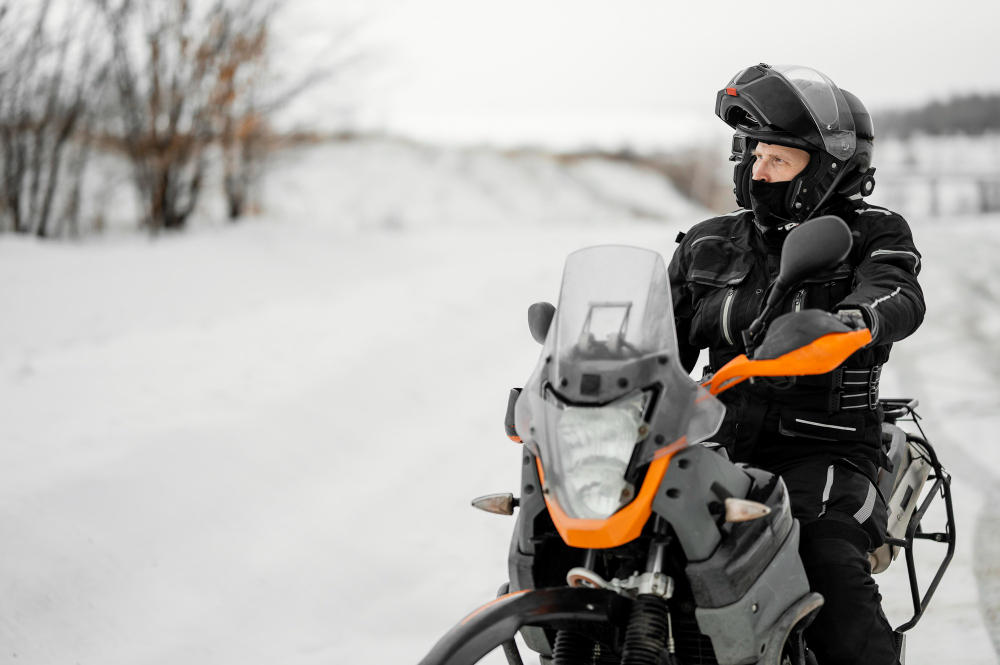
- Scooter: tires with winter treads improve braking and traction on slippery surfaces, even though they’re not legally required; remember to adjust tire pressure for the cold and check their condition more often. This reduces slips and shortens braking distances in a typical Polish winter.

Courier winter setup – Lights: what’s required by law?
- Legal minimum: at least one white/yellow front position light (may blink), a red rear position light, and a red reflector; use them after dark, in tunnels, or in low visibility. Visibility should be approximately 150 m.
- Equipment and budget: a solid front/rear set costing 150–400 PLN is enough for city use; in cold weather, runtime drops, so rotate batteries and keep lights/power banks warm before heading out. Set the beam carefully, so you don’t dazzle others and maintain real visibility on wet asphalt.
E-bike batteries in winter: range and lifespan
- Reduced range: at low temperatures, lithium-ion batteries lose part of their capacity — realistically expect 15–30% shorter range in light frost, and at around −20°C the available power may drop by half. Planning your route and the level of assist becomes critical.
- Storage and charging: keep the battery indoors at 10–20°C and install it just before your ride; after riding in the cold, let it warm up to room temperature before charging. This is the simplest way to maintain cell health and stable range.
- Backup battery and habits: if possible, carry a spare battery in an insulated bag and avoid long stops in the cold. A spare battery is the surest way to maintain your number of deliveries per shift; also keep your tire pressure up, drivetrain lubricated, and ride smoothly to limit power draw. Avoid long breaks in the freezing cold — take the battery indoors between runs.
Costs and return on investment in Polish conditions
- Minimum package: winter tires for a bike (2 × 120–250 PLN) + lights 150–400 PLN = approx. 390–900 PLN; this realistically reduces slips and downtime during peak hours, which pays off faster in the season due to fewer canceled runs. It’s an investment in reliability, not “gadgets.”
- E‑bike: a second battery is an extra cost depending on the system, but with a 15–30% drop in range, it lets you keep up deliveries without ‘running home’ to recharge; it’s often the difference between a full and a shortened shift. Good charging habits reduce long-term cell degradation.
Season start checklist
- Tires for the conditions: winter tread or studs if you often hit ice; check pressure weekly in winter. It’s not mandatory, but it really improves safety.
- Legal lighting: white/yellow front, red rear + red reflector; carry spare batteries/power bank. Fines are issued for lack of lights, not for tire tread patterns.
- E-bike battery: store it in warmth, charge after warming up, plan for short ‘pit stops’; consider a second battery for longer shifts. It’s the simplest way to maintain your delivery count.
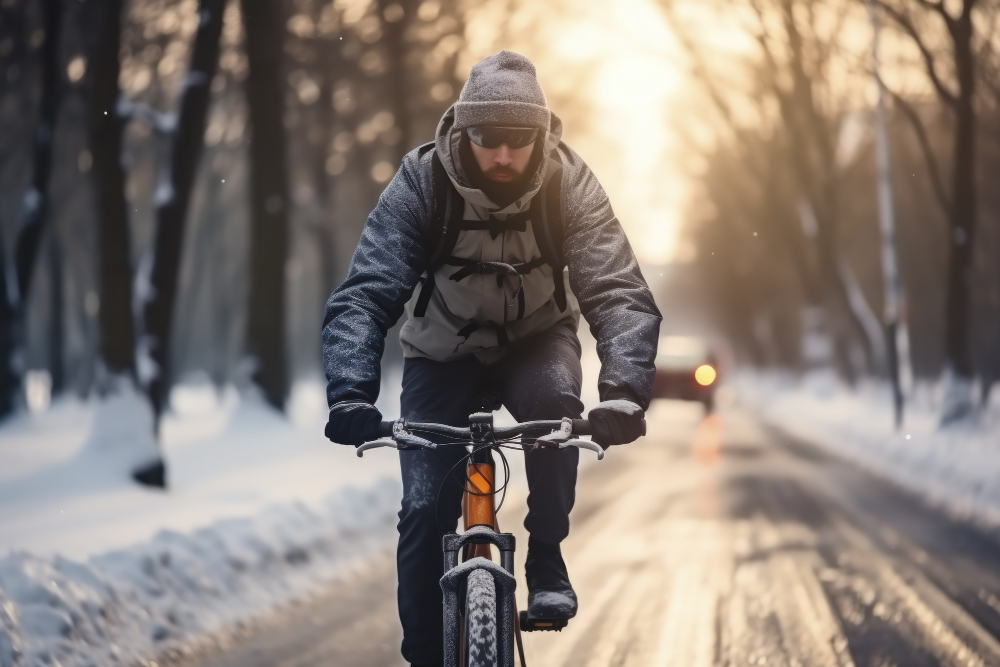
Table: Courier winter setup
| Component | What to buy/do | Cost in PL | Effect in winter | Legal basis/note |
|---|---|---|---|---|
| Bicycle tires | Winter tread or studs for black ice | 120–250 PLN/each (studs cost more) | Better traction and shorter braking distance | No requirement, safety decision |
| Scooter tires | Winter tread, check pressure more often | 200–400 PLN/each | More stable starts/braking | No requirement, adaptation to conditions matters |
| Lighting | Front white/yellow, rear red + reflector | 150–400 PLN/set | Legal, long-range visibility | Required after dark, in tunnels, or poor visibility |
| E-bike battery | Second battery + good charging habits | 1200–3000+ PLN | Maintain number of deliveries despite frost | Range drops 15–30%+, keep the battery warm |
Working through apps and collaborating with Avalon Logistics
The most popular apps are Glovo, Uber Eats, Wolt, Bolt Food and Stuart— all of them operate in major cities, and during the winter peak offer bonuses for peak hours and difficult weather conditions, which helps make up for slower progress on slippery streets.
Avalon Logistics acts as a trusted fleet partner — making onboarding fast, handling formalities (contracts, settlements), offering support in selecting winter gear, and providing operational support, allowing you to focus on riding and your hourly results.
Practically: set up zone notifications and restaurant priority, plan looped routes against the wind at the start of your shift, keep a second battery in an insulated bag, and during dead periods, pick neighborhoods with a dense network of restaurants — this is a simple way to get more orders and reduce range loss.
Summary
In Poland, the keys are practice and legal lights: winter tires and studs improve traction but aren’t required, whereas lighting is mandatory and has a real impact on safety and tickets. Take care of your lights, winter tires suited to your route, and battery management habits — and if you’d like, we can prepare a personalized shopping list and a simple service plan for the season