Why is tire pressure a topic for 5.o?
For a courier and taxi driver, the car is a work tool—orders, safety, and earnings all depend on its condition. Correct tire pressure is a simple parameter that has a huge impact on braking distance, fuel consumption, and driving comfort throughout the day. Too low or too high can turn a calm shift into an expensive breakdown or a dangerous situation on the road.
If you drive several hundred kilometers a day in the city, your tires wear out faster than in an average private car. That’s why it’s worth knowing not only what the correct pressure should be, but also how to check it, what the tire pressure warning light means, and when to act immediately.


What tire pressure for a delivery or passenger car?
There is no one value “for all,” but in most passenger cars, a range of about 2.1–2.5 bar is considered a safe operating range. In delivery vehicles and more heavily loaded cars (e.g., wagons with luggage, vans), higher tire pressures are often recommended, usually closer to 2.7–3.0 bar. You will always find the precise values on the sticker inside the driver’s door or by the fuel filler cap.
For taxi drivers or couriers, it’s important to leave the lower end of this range “for Sunday drivers” and at work stick to the middle or upper values recommended by the manufacturer. This way, the car handles frequent stops, driving with passengers or parcels, and taking corners under load much better.
Tire pressure calculator – why do you need one?
Instead of guessing what pressure will be best, it’s worth using tools like a tire pressure calculator. You enter your car model, tire size, and often the type of load (solo, with passengers, luggage), and the tool suggests approximate values. This is especially useful if you drive on rims different from factory ones or change tire sizes.
For a courier who works with several different fleet vehicles, such a tool helps quickly deal with the issue and make sure the pressure is not just “some”, but really sensibly chosen. Those few minutes can save you tires worth several hundred PLN per set.
Tire pressure sensor – how does it work and what not to ignore?
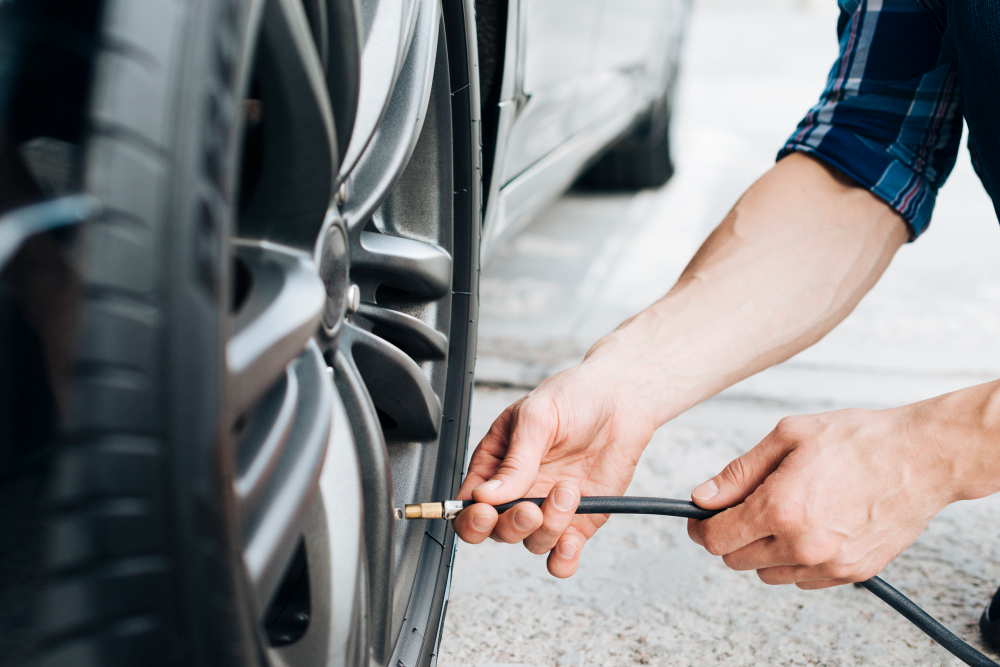
Modern fleet vehicles are usually equipped with a tire pressure sensor (TPMS). The system monitors air levels in the tires and warns the driver when something is wrong. If the tire pressure warning light suddenly comes on, it’s not a “suggestion”, but a real signal that one or more tires have a problem.
Remember:
- If the tire pressure warning light is blinking or stays on—pull over safely and check your tires.
- Don’t erase the warning message “blindly” before physically measuring the pressure with a gauge.
- After inflating the pressure as recommended—reset the system (according to the car manual) so the tire pressure sensor starts working with the new values.
The most common mistakes of couriers and taxi drivers
When you’re working under time pressure, it’s easy to fall into routines and make the same mistakes repeatedly. Here are a few of them:
- Driving with too low pressure “because nothing happens”—increases fuel consumption and lengthens braking distances;
- Eyeballing it—using the same value for all tires without checking the manufacturer’s recommendations;
- Ignoring small differences: 0.3–0.4 bar is already a noticeable change in handling, especially on wet surfaces;
- Checking tire pressure only during seasonal changes instead of once a month or at every major inspection.
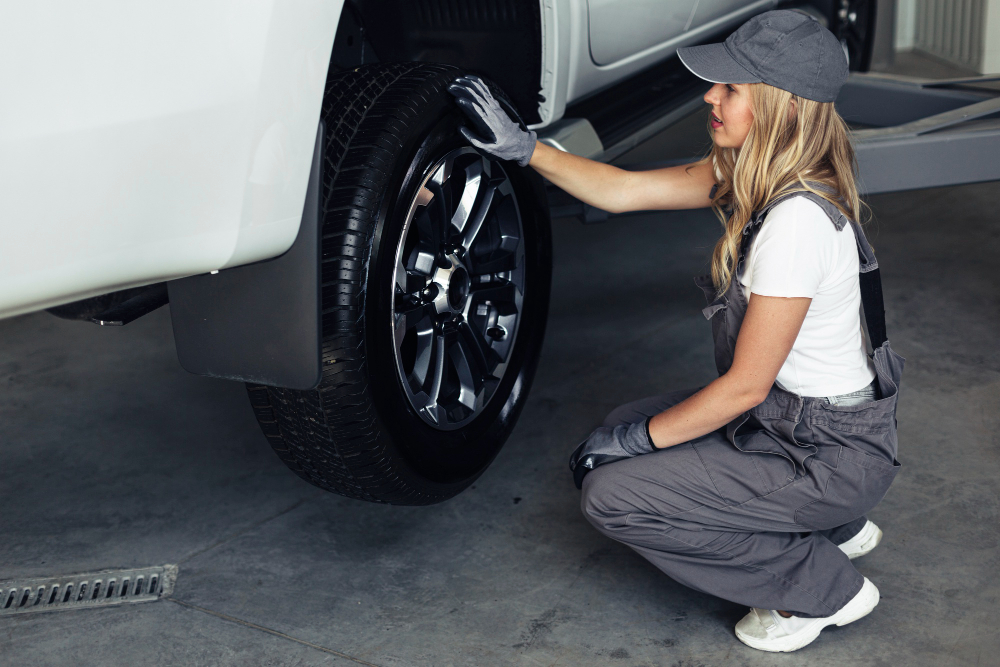
Simple checklist before you change tires
- Check the chart in your car—what tire pressure does the manufacturer recommend?
- Measure the pressure on cold tires (the car has not been used for at least 2–3 hours).
- Inflate the tires to the correct front/rear values.
- Check if there is any uneven tread wear – this may indicate incorrect pressure or alignment.
- Make sure the tire pressure sensor does not report an error after adjustment.
Properly set tire pressure means less stress and more safety in everyday city driving—and this directly translates into your earnings and work comfort.

BECOME A TAXI DRIVER
Work and earn right away!