If you travel a lot on business, this guide will help you handle the topic without stress and without costly surprises. Sectional speed measurement doesn’t “catch” a brief acceleration like a classic speed camera; instead, it calculates your average speed across a given stretch of road. So, the bad habit of slamming on the brakes suddenly doesn’t work here.

BECOME A TAXI DRIVER
Work and earn right away!



How does sectional speed measurement work?
In practice, the system records your entry and exit from the monitored section (including time and license plate number), and then calculates your average speed. So, the answer to the question: How does sectional speed measurement work? is simple: it calculates the average, not just the exact moment you exceed the speed limit. This also explains why drivers ask if they’ll get a photo from such a system. The system records the vehicle for identification, but it doesn’t work like the typical “flash” in a single spot. It’s safest to assume that a visible license plate is enough to issue a fine if the average exceeds the limit.
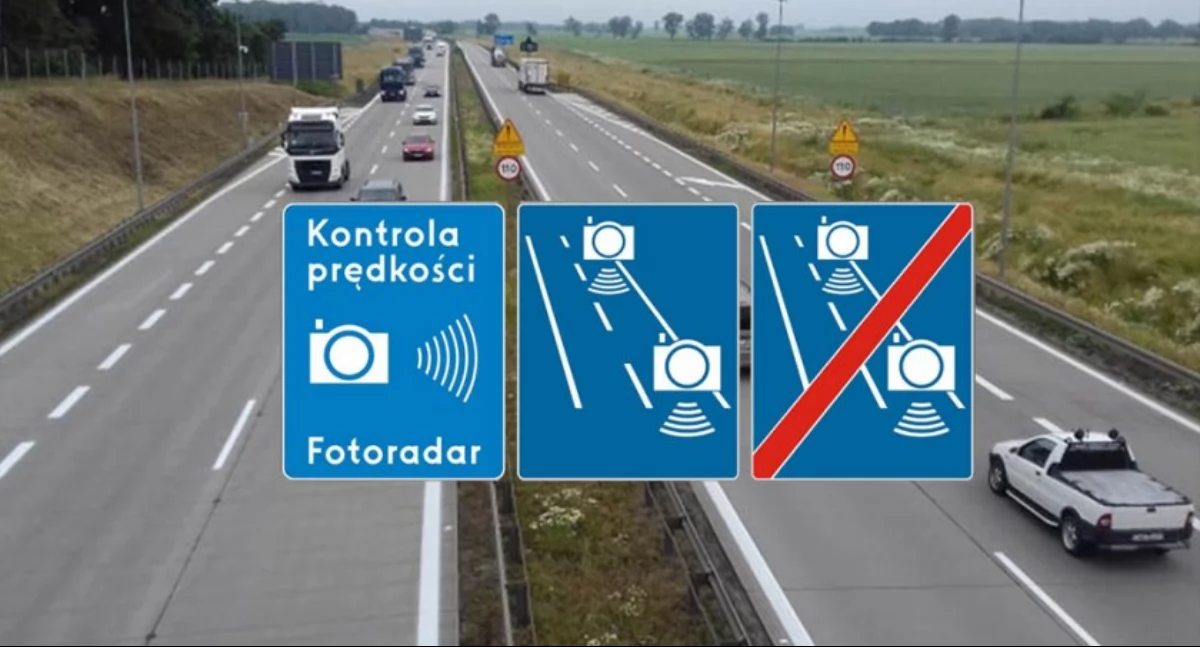
Sectional speed measurement signs – what do they mean?
The signs inform you of the start and end of control, as well as the limit that applies to the section. In logistics, this matters because permitted speeds may vary depending on the vehicle type and the road section. There’s one basic rule: set your cruise control to the actual speed within the limit, and keep it steady the whole way. That works better than “slowing down just before the camera.”
- Look out for warnings and start/end signs for the section
- Stick to the limit even on exits/curves, as the section may be longer than it seems
- Avoid nervous acceleration after overtaking, as the average speed quickly rises
Sectional speed measurement map: how to plan your company route
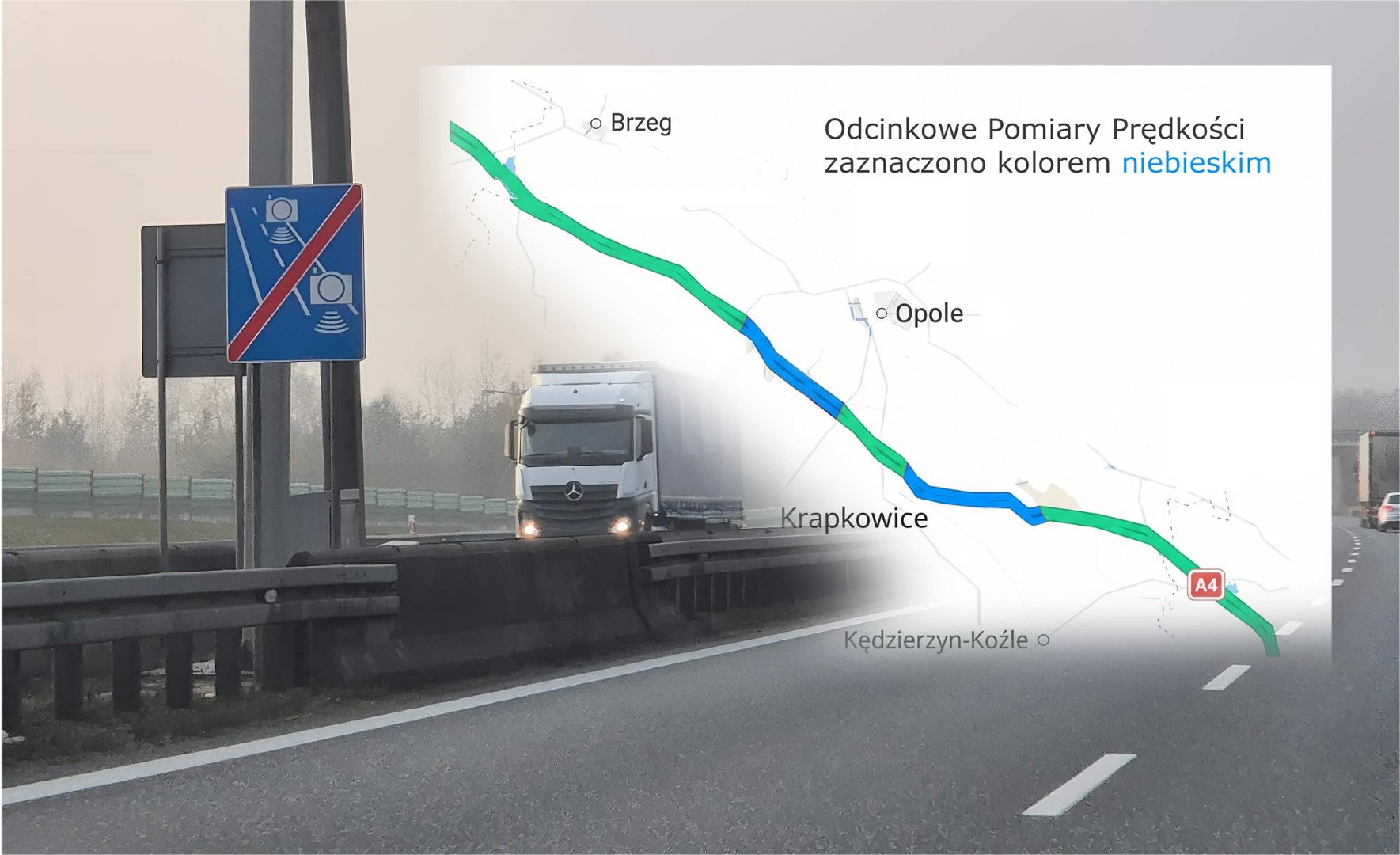
The most reliable source is the sectional speed measurement map in official publications (e.g. CANARD) and updates in navigation systems, but remember that the locations of controlled sections can change over time. When planning business routes, it’s worth following a simple procedure: check the sections before you depart, and on the road, drive “steadily” rather than “racing against the clock.” This reduces the risk of delays due to checks, fines, and stoppages for explanations. For fleets, a short driver instruction also works well: where OPP is most often encountered and how to recognize them.
Most common driver questions: A1, A2, A4, S7, S8, S14
In practice, most discussions concern expressways, which is why phrases like: Sectional speed measurement A1, Sectional speed measurement A2, Sectional speed measurement A4, Sectional speed measurement S7, Sectional speed measurement S8, and Sectional speed measurement S14 are common. If someone asks outright “is there sectional speed control on the A1”, the answer is: there can be monitored sections on A1, but their location may change; always check the most up-to-date map and road signage when you travel. For cost planning, one thing matters: OPP doesn’t “let up” once you pass a single camera pole—the control lasts until the section end sign.
Sectional speed measurement fines and tolerance: what’s important to know
The fine for a sectional speed violation depends on the amount by which you exceed the limit, just like in standard fixed penalty rules. Drivers also often ask about sectional speed measurement tolerance, but in practice, it’s not worth basing your driving style on “the margin,” as average speed measurement still rewards steady, calm driving. It’s safest to assume you should drive at or below the limit, and your dashboard and navigation may show slightly different values. If a company wants to truly reduce fines, the best method is a driving culture and consistent procedures—not “testing the boundaries.”
Table: Sectional speed measurement vs traditional speed camera
| Solution | What it measures | Best strategy |
|---|---|---|
| Sectional speed measurement | Average speed over the section | Steady speed, cruise control, no “spurts” |
| Fixed-point speed camera | Speed at a single point | Slow down before the camera, but it’s better to drive smoothly |
Cooperating with Avalon Logistics as a Taxi Driver
If you drive professionally, a smart option is collaboration with the fleet partner Avalon Logistics and working as a taxi driver on apps like Uber, Bolt, and Freenow. In practice, you get support with formalities and a stable back office, so you can focus on safe driving and on-time rides. This is also important in the context of sectional speed measurement, because work “on the apps” can tempt you to make up time between jobs. Steady speed and sticking to limits on the section help you avoid fines and unnecessary work interruptions.
Summary
Sectional speed checks in Poland force calm, consistent driving, which usually means fewer risky maneuvers and lower “en route” costs. If you manage drivers, it’s worth introducing a simple rule: after the OPP sign, drive evenly until the end of the section, and don’t try to aggressively make up lost time. Would you like me to prepare a short fleet checklist (1 page) to implement for drivers: signs, procedure and most common mistakes?

BECOME
A TAXI DRIVER
Work and earn right away!