Spring can “open up” the road almost like a can and unfortunately, your wallet too. Potholes after the thaw, especially the deep ones, can result in a bulged tire, a bent rim, or play in the suspension that may only show up after a week. The good news: you can drive smarter and reduce risk and costs, and after a hard hit, you can do a quick inspection in 10 minutes.

BECOME A TAXI DRIVER
Work and earn right away!


Why is it worst after winter?
After winter, the asphalt moves: water gets into microcracks, freezes, expands, and then thaws. Add salt, heavier cars, and temperature swings, and you have the perfect storm. The result is potholes, sharp edges, and gaps that can “grab” a wheel out of nowhere.
The most affected parts are:
- Tires (cuts, bulges/bubbles, sidewall damage)
- Rims (bending, cracking, vibrations)
- Suspension and steering system (play, misaligned geometry, worn out bushings/links)
How to reduce costs: simple habits that work
It’s not about driving like a turtle, just a few decisions that really make a difference in your workshop bill.
- Slow down before a “suspicious” spot, but don’t brake right at the bump (hard braking puts extra weight on the front, making it easier to damage the tire and rim)
- Keep a bigger distance from the car ahead so you see gaps ahead and have time to react
- Avoid bumps in the asphalt smoothly, without sudden steering (abrupt movement can damage the tire more)
- Watch out for puddles, as they often hide damage with sharp edges
- Don’t “scrape” curbs in the parking lot, because after winter the tire sidewall can be more prone to damage
- Don’t overload the car (the heavier the load, the greater the risk of hitting the rim or bending it)
If you’re a taxi driver working with Bolt or Uber-especially if you’re using your own car or one rented from Avalon Logistics-cautious and safe driving is not only passenger comfort, but also truly a lower risk of work stoppage. The less sudden maneuvers and falling into potholes, the less often you pay extra for tires, rims, and suspension repairs, and your car stays on the road longer.

Tires: what matters most?
The cheapest tire usually turns out to be the most expensive when you hit a pothole. What counts here is the sidewall strength and quality of construction.
Pay attention to these things:
- Correct pressure (too low increases the risk of hitting the rim, too high worsens comfort and grip on uneven surfaces)
- Condition of the tire sidewall (cracks and “tired” rubber after winter increase the risk of bulges)
- Profile size (lower profile looks better, but handles impacts worse; if you often drive in the city post-winter, higher profile often means savings)
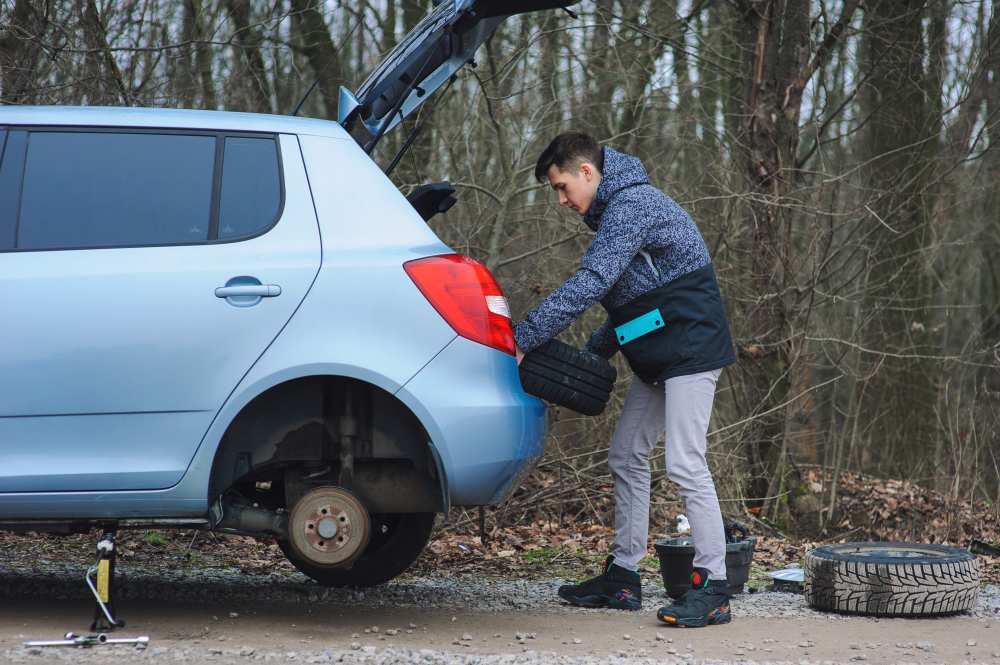
Rims: when does repair make sense-and when does it not?
A bent rim isn’t just “vibrations in the steering wheel.” It’s also faster tire and bearing wear.
After hitting a pothole:
- If you feel vibrations at 80–120 km/h, suspect the rim or imbalance
- If air is leaking, the rim may be cracked or the tire cut at the bead
- If you have alloy wheels, don’t ignore microcracks – safety here is more important than saving money
Suspension and alignment: the silent money thief
The worst-case scenario is “everything seems fine,” but after a month the tires are worn on the inside. After a hard hit on a pothole, the alignment can go out of whack, even if the car still drives straight.
Typical symptoms that it’s worth getting checked:
- The car pulls to one side on a straight road
- The steering wheel is crooked when driving straight
- There are new knocks over bumps
- The tires have started to wear unevenly
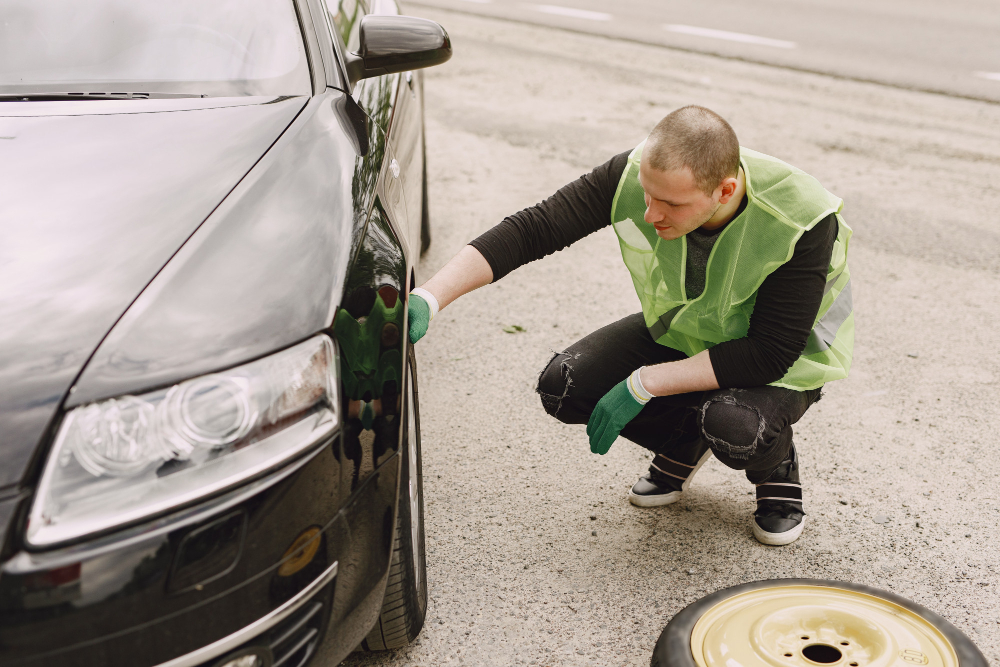
10 minutes after hitting a pothole: what you should do
This check doesn’t require a jack or a pit. You can do it in a parking lot and often it will save your tire or rim before the problem gets worse.
- Stop in a safe place and inspect the wheel from the outside (make sure the tire doesn’t have a sidewall bulge)
- Check the rim edge (scratches, fresh dents, cracks)
- Take a quick look to see if the wheel is “standing straight” relative to the wheel arch (a clear left/right difference may signal a problem)
- Drive slowly a few meters and listen for rubbing, clicking, or “thumping” sounds
- Check the pressure if you have TPMS sensors or a compressor (a pressure drop is a warning sign)
- Do a quick steering wheel test on a straight stretch (to see if it pulls or the steering wheel is off-center)
- Assess vibrations: if new shaking appeared, don’t keep driving and hope it’ll go away
- When you get home, check the tire again in better light (a bulge can develop after a while)
Most common symptoms and what they may mean
Below is a quick cheat sheet to help you decide: keep driving, schedule a service, or stop immediately.
| Symptoms | What it could be | What to do right away |
|---|---|---|
| Sidewall bulge on tire | Broken belt (risk of blowout) | Don’t drive fast, best to replace the tire |
| Steering wheel vibrations after impact | Bent rim, imbalance, damaged tire | Slow down, get balancing/diagnostics done |
| Car pulls, steering wheel off-center | Misaligned geometry, suspension component | Book alignment and play check |
| Rapid pressure drop | Puncture, cracked rim, damaged valve | Stop, refill, and look for leaks |
| Knocks over bumps | Links, bushings, ball joint, shock absorber | Avoid rough roads, have it checked at a workshop |
When you shouldn’t try to “save” and need to act immediately
There are situations where continuing to drive may end up costing more than a tow truck.
- You see a bulge on the tire or a sidewall cut
- You feel strong vibrations and the car “floats”
- You hear metallic scraping or rhythmic knocking after an impact
- The pressure drops within minutes, not days
Summary
Potholes and damaged roads after winter are a classic test for tires, rims, and suspension, but they don’t have to mean financial disaster. You’ll save the most if you combine a calmer driving technique with a quick check after an impact and a fast response to the first symptoms.

BECOME
A TAXI DRIVER
Work and earn right away!