Warning lights in the car – why should you know them?
On the road, time is important, but safety and avoiding breakdowns are even more critical. Car warning lights can alert you to a malfunction before your vehicle breaks down. This text provides a simple overview: what each warning light means, how to interpret their colors, and which signals are critical for vehicles, including those used for taxi services.

BECOME A TAXI DRIVER
Work and earn right away!



Colors of warning lights: red, orange, yellow, and green
The simplest rule: the “warmer” the color, the more urgent the situation.
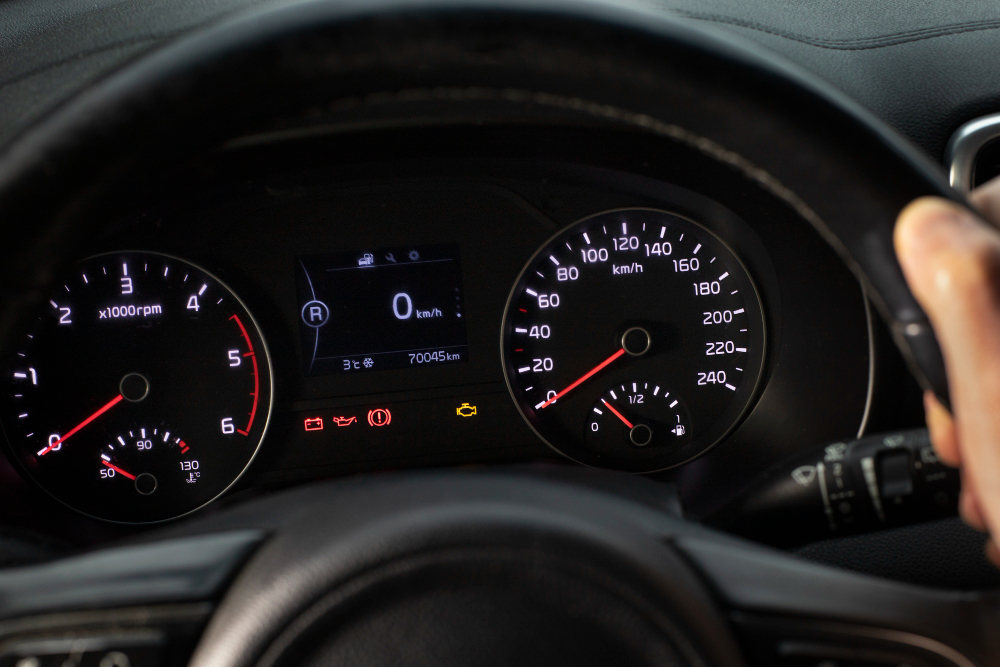
- Red warning lights in the car: stop as soon as it’s safe; continuing to drive may damage the engine or braking system
- Orange warning lights in the car: you can usually keep driving, but you need to react and plan a service visit
- Yellow warning lights in the car: warning or system malfunction; often indicates limited functionality
- Green warning light in the car: indicates a particular function is active (e.g., lights)

Descriptions of dashboard warning lights – most common symbols and what to do
Below you’ll find a practical guide to “what a given warning light means” plus the first step you should take as a driver.
Oil warning light in the car
If the red “oil can” comes on, take it seriously.
What to do:
- Pull over to a safe spot and turn off the engine
- Check the oil level (if conditions allow)
- If the level is OK but the light stays on: do not drive, call for assistance/service
Engine warning light in the car (check engine)
This is most often yellow.
What to do:
- If the car runs normally: drive calmly and schedule diagnostics
- If the engine is jerking, losing power, or the warning light is flashing: reduce load, best to stop driving and seek assistance
Warning lights in the car: brakes, temperature, charging
In fleet vehicles, these are common sources of downtime.
- Brakes (red): check the handbrake, fluid level; if in doubt, stop
- Temperature (red): don’t “push through” to your destination, stop and cool down the system
- Battery/charging (red): you may drive a short distance, but risk getting stranded
Unusual warning lights in the car that can surprise you
Not all controls in a car are obvious, especially in newer models.
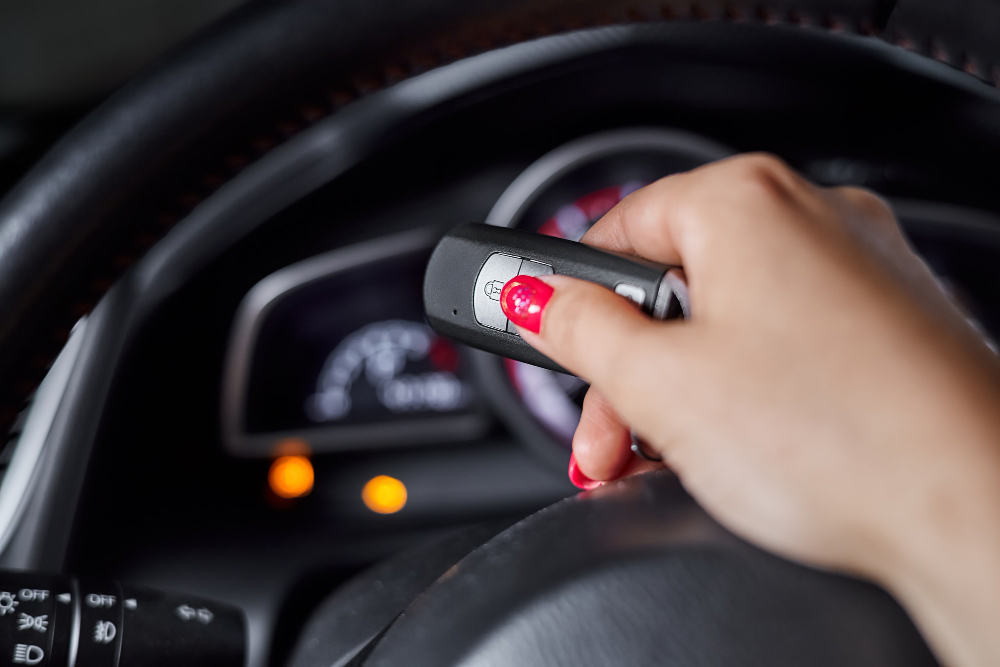
- Key light in the car: usually means the immobilizer/key is not recognized, sometimes a service message
- Car skidding light: ESP/ASR is active or has a malfunction; if it stays on, the system may be turned off
- Light symbol in the car: bulb/LED error or a problem with the lighting system (it’s worth checking the fuses too)
- Car lighting indicators (e.g. high beams, fog lights): informational, but warnings may appear in case of failure
All dashboard indicator lights – is it possible to remember them all?
In practice, you don’t need to memorize what every dashboard indicator looks like. It’s enough to be able to:
- distinguish urgency by color
- know 5–7 critical icons (oil, temperature, brakes, charging, airbag, engine)
- have the manual handy (a PDF on your phone) or the number for your fleet manager
Quick reference table: meaning of car indicator lights (response)
| Indicator Type | Example | What to do immediately |
|---|---|---|
| Red | oil/temperature/brakes | Stop safely, do not risk driving further |
| Orange | engine, DPF, ABS | Drive calmly, reduce load, plan a service visit |
| Yellow | ESP/ASR, sensors | Proceed with caution, check any messages |
| Green | lights/turn signals | Information: function is active |
Cooperation as a taxi driver with Avalon fleet partner
If you drive professionally, it may be a good idea to work together as a taxi driver with Avalon Logistics fleet partner: you receive organizational support, handle paperwork more easily, and can focus on driving instead of “red tape.” This is especially convenient when you operate on several platforms at once and want to have a stable background for daily work in the Uber, Bolt, and Freenow apps.
Summary: fewer downtimes, more control
Dashboard indicator lights are not “scare tactics”, but rather an early warning system that gives you time to react sensibly before a minor issue turns into a costly breakdown. If you drive long distances or manage a fleet, set up simple procedures: red indicator = safe stop and verification, orange indicator = drive calmly and quickly plan service. This way, you minimize the risk of downtime, towing, and delivery delays. In practice, all it takes is consistency and a single rule for drivers: don’t ignore warnings, just act according to the established procedure.

BECOME
A TAXI DRIVER
Work and earn right away!